How to Choose a Camping Tent for Your Group
To choose a camping tent, match its floor plan to your sleepers, beds, and gear. Then compare layout, headroom, ventilation, weather features, setup, and packed size with the way your group camps.
On this page (8 sections)
- How do you choose a camping tent size?
- Which tent layout suits your group?
- How much headroom do you need?
- Which tent features matter for your trip?
- Four tents to compare for different group needs
- What should you check before buying a camping tent?
- What camping tent mistakes should you avoid?
- How should you make the final choice?
To choose a camping tent for your group, match the floor plan to your sleepers, beds, and gear, then compare layout, headroom, ventilation, weather features, and setup. Capacity labels help narrow the options, but the dimensions and shape tell you more about how people and bags may fit.
Decide where you plan to camp and how you will sleep before comparing models. For a broader checklist of what to bring, start with our camping gear guide.
How do you choose a camping tent size?
Choose a tent size by comparing its floor dimensions with your group's sleeping setup and the gear you want inside. Don't rely on the person count alone if you plan to use air beds, wide pads, or keep bags in the tent.
Write down the number of sleepers, what each person will sleep on, and whether bags stay inside overnight. Then compare the plan with the tent's floor length and width, stated capacity, and shape.
The Amazon Basics 4 Person Dome Tent has a 9 x 7 ft floor and a 48 in center height. Those dimensions give you a starting point for a compact four-person arrangement, but your pads and bags determine how the space works for your group.
A six-person label doesn't guarantee a roomy shared space. Use our 4 person vs 6 person tent guide to weigh the tradeoff, then browse six-person camping tents if the larger size looks like a better fit.
How to choose a camping tent for people and gear
Plan the floor as separate sleeping and storage areas. A quick sketch helps you check whether people can reach the door and get past one another after pads, bags, and shoes are inside.
Measure the width and length of each pad or air bed, then draw them in the arrangement you expect to use. Leave room for access if someone may need to get out during the night.
Count gear honestly. Backpacks and bulky clothing can take up floor space quickly.
If those items need to stay inside, choose a layout that fits both sleepers and belongings without blocking the entrance.
Think about who will share the tent, too. Children may be comfortable sleeping close together, while adults may want more room to turn and reach their belongings.
When in doubt, compare a larger tent's floor plan with the smaller option rather than assuming the capacity label settles the question.
Which tent layout suits your group?
Choose a layout based on how your group will sleep and move inside. Floor dimensions, wall shape, doors, and headroom matter more than the style name by itself.
Dome tents have sloping walls, so standing room is concentrated near the middle. Cabin-style tents often have more upright walls, which can make more of the floor useful for moving around or changing clothes.
A cabin shape can suit a group that values open interior space, while a dome can work for a simpler sleep-first plan. Compare specific dimensions before choosing: a tall center doesn't mean every part of the tent has standing room.
Read our cabin tent vs dome tent guide for a closer look at how each layout can fit a family.
How much headroom do you need?
Choose enough headroom for what you expect to do inside, such as sitting up or changing clothes. Compare center height with wall shape, because the highest point doesn't describe the whole interior.
The Coleman Sundome 6 Person Tent has a 6 ft center height, while the Amazon Basics 4 Person Dome Tent has a 48 in center height. The UNP 6 Person Cabin Tent reaches 78 in at the center, which may suit campers who want to stand while changing.
You may not need to stand inside if the tent is mainly for sleeping. Extra headroom can be convenient when children need help getting ready or the group needs to wait out a shower.
Which tent features matter for your trip?
Choose features that solve a need you expect at camp. Compare rain protection, airflow, setup, doors, and storage with your routines and likely conditions.
How to choose a camping tent for weather
Check how the tent is built to manage rain and airflow. The Coleman Sundome has welded corners and inverted seams, while the Amazon Basics tent has welded seams and a removable rainfly.
Those features are designed to help limit water entry, but correct setup still matters. Follow the tent's instructions and attach the fly as directed.
Ventilation matters in warm or damp conditions. Windows, vents, and mesh panels can help air move through the tent, so consider their placement and how you can use them with the fly attached.
How important is setup time?
Pick a setup style the people camping with you can manage. Check the pole design and whether you expect one person or two to pitch the tent, then practice before the trip.
The Amazon Basics tent uses shock-corded poles and snag-free sleeves, and the Coleman Skydome Dark Room Tent has pre-attached poles. Both designs are intended to make setup quick, but allow extra time while you learn the steps.
Choose a level campsite and clear away sharp sticks and stones before pitching. Lay out the poles, tent body, rainfly, and stakes first so you can follow the instructions in order without searching through the bag.
Do doors and storage features matter?
Doors and small storage features can make a shared tent easier to use. Look for an entrance that works with your sleeping arrangement and pockets for items you want off the floor.
A wider door can help when moving air beds or bags in and out. The Coleman Skydome includes mesh storage pockets and a gear loft, while the UNP 6 Person Cabin Tent has one mesh door and five mesh windows.
Before setting up, decide where shoes, bags, and small items will go. Keep the entrance and walking path clear, and use built-in storage for light items instead of piling everything beside a sleeper.
Four tents to compare for different group needs
These four options suit different capacity and layout needs. Match their dimensions and features with your sleeping plan before choosing one.
Coleman Sundome 6 Person Tent
The Coleman Sundome 6 Person Tent suits groups that want a generous floor and room to move around. Its floor measures 10 x 10 ft, and it fits two queen-size air beds with space for sleeping bags and gear.
Welded corners and inverted seams are designed to help keep water out. Continuous pole sleeves and Insta-Clip attachments make the setup process simpler.
Choose it for car camping when the floor area and standing room fit your group. Skip it if you need a smaller tent to carry or your campsite cannot fit its footprint.
Amazon Basics 4 Person Dome Tent
The Amazon Basics 4 Person Dome Tent suits a smaller group looking for a compact dome layout. Its 9 x 7 ft floor, 48 in center height, and four-person capacity give you concrete dimensions to check against your pads.
The tent has a back window and cool-air port, an interior mesh pocket, and a removable rainfly. Its welded seams are designed for weather protection.
Consider it for a sleep-focused group that can make the floor plan work. Skip it if you need standing room or generous space for four adults and their bags; measure your gear before deciding.
Coleman Skydome Dark Room Tent
The Coleman Skydome Dark Room Tent suits campers who want less sunlight inside and a quick setup. Its Dark Room technology blocks 90% of sunlight and reduces heat inside compared with a comparable Coleman tent.
The floor measures 8 x 7 ft, with a 4 ft 8 in center height, and it fits one queen-size air bed. Its nearly vertical walls provide 20% more headroom than traditional Coleman dome tents.
Choose it when reduced sunlight and the queen-bed layout fit your plans. Skip it if your group needs floor space for several beds or enough height to stand.
UNP 6 Person Cabin Tent
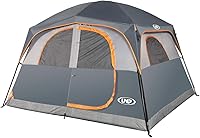
The UNP 6 Person Cabin Tent suits a group seeking a taller cabin layout. It measures 10 x 9 ft with a 78 in center height and fits two air mattresses or six sleeping bags.
It has one large mesh door, five mesh windows, and a mesh top. The stated setup time is about 5 minutes for two people or 10 minutes for one person.
Choose it if standing room and mesh panels are priorities for your group. Skip it if the floor plan doesn't fit your campsite or you need a smaller packed tent.
What should you check before buying a camping tent?
Before buying, confirm the floor dimensions, packed size, setup plan, and campsite fit. The tent also needs to fit in your vehicle and leave room for the people and gear at your site.
Check the available campsite area, including room for stakes and guy lines where needed. Compare the packed dimensions with your vehicle's storage space and how you plan to carry the tent.
Make sure everyone who may pitch the tent understands how its poles, fly, and stakes fit together. Practice at home, and check that the tent and its parts are dry before packing them away after a trip.
Plan what goes inside and what stays outside. If you need a separate ground layer, our tent footprint vs tarp guide explains how to think through that choice.
What camping tent mistakes should you avoid?
Avoid choosing by capacity, height, or a quick setup claim alone. The best fit is the tent whose floor plan, layout, and setup work for your group and campsite.
A common mistake is planning around people but forgetting beds and gear. Draw the actual arrangement before you buy, and leave a path to the door.
Another is treating center height as full standing room. Check the wall shape and consider where people will sit, change, and store belongings.
Don't wait until you reach camp to learn the pole layout. Practice pitching the tent at home, follow its instructions, and make sure the rainfly and stakes are accounted for before leaving.
Finally, avoid packing a damp tent for storage. Let it dry fully after a trip, then store it according to its care instructions to help prevent mildew and fabric damage.
How should you make the final choice?
To choose a camping tent, start with the sleeping plan, then let floor space and features break the tie. Pick the Sundome if its larger floor and headroom suit your group, the Amazon Basics dome for a compact four-person plan, the Skydome for a lower-light interior, or the UNP cabin tent for its taller layout and mesh panels.
Compare your final candidates on floor dimensions, setup, and campsite fit, then choose the one your group can pitch and use comfortably. Browse our best 4 person camping tents or best 6 person camping tents if you want more options by capacity.
Frequently asked questions
How do I choose a camping tent size?
Start with the number of sleepers, then map the beds or pads they will use and the gear that needs to stay inside. Compare that plan with the tent's floor dimensions, shape, and stated capacity.
If you want space to move or store bags indoors, allow more floor room than a close sleeping fit requires.
Should I buy a tent rated for the exact number of people in my group?
The capacity label is a starting point. Check the floor plan against your sleeping pads or air beds, then decide whether you also need space for bags and access between sleepers.
A tent with a higher capacity may give a group more room, but compare its dimensions and setup needs before choosing.
What is the difference between a dome tent and a cabin tent?
Dome tents have sloping walls, which reduce usable space near the edges. Cabin tents tend to have more upright walls, which can make more of the floor convenient for moving and changing.
Compare each tent's dimensions, center height, and setup method, since shape alone doesn't determine how well your group will fit.
Do I need a rainfly on a camping tent?
A rainfly adds a cover over the tent body, and many tents pair it with seams or corners designed to limit water entry. Check how the fly attaches and how the tent ventilates when it is in place.
Pitch the tent as directed and choose features for the conditions you expect.
How much headroom should a camping tent have?
Choose headroom for the activities you expect inside, such as sitting up, changing clothes, or standing. Center height measures the highest point, so also consider how the walls slope and how much usable space sits below that point.
A taller tent is handy for standing, while a lower one may suit a sleep-first plan.