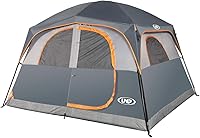
How to Set Up a Coleman Sundome 4 Person Tent
Set up the Coleman Sundome 4 person tent by staking the four corners, sliding the pre-attached poles through the sleeves, and raising the frame before adding the rainfly. It's a free-standing dome, and Coleman says the snag-free sleeves and pre-attached poles get it pitched in about 10 minutes.
On this page (10 sections)
- What should you do before the first pitch?
- How do you thread and raise the pre-attached poles?
- How do you stake and tension the body?
- How do you fit the rainfly and guylines?
- What's worth knowing about this tent before you buy?
- How do you pick the right site and conditions?
- How do you take it down and pack it away?
- What camp furniture makes the pitch more comfortable?
- What affects how fast the tent goes up?
- Final say on the Sundome setup
Here's how to set up a Coleman Sundome 4 person tent: stake the four corners, slide the pre-attached poles through the sleeves, and raise the dome before fitting the rainfly. Snag-free sleeves and poles that are already attached to the body are what let Coleman quote about 10 minutes for the pitch.
The tent is free-standing once the frame is up, so setup is mostly a matter of order. Getting the sequence right on the first try saves you from undoing work when a pole binds or the floor shifts.
What should you do before the first pitch?
Lay the tent out flat and stake the four corner loops before raising anything. The body spreads out flat, the tub floor sits smooth, and the poles won't pull the fabric in the wrong direction.
Clear the ground first. Remove sticks, rocks and cones from the spot, then spread a ground cloth or footprint if you use one so no sharp edge presses up through the floor.
On the 4 person size, the two long poles cross over the middle and the shorter pole holds the side. Check that the sleeves aren't twisted before you start sliding.
Pull the stakes at a slight angle away from the tent. Haul each corner snug but not tight, because the body still needs room to rise as the poles bend.
How do you protect the floor before setup?
A ground cloth keeps grit and damp soil off the coated polyester floor, which is where most tent wear starts. Lay it under the footprint area, not wider than the tent, so rain doesn't run onto it and under the floor.
The Clostnature Heavy Duty Tent Footprint is a 210T ripstop polyester sheet with a waterproof coating and metal grommets for stakes. It measures 87 x 59 inches and packs into a drawstring bag about the size of a cellphone.
It's waterproof on its own and doubles as a picnic tarp or rain fly elsewhere. Fold it to sit inside the tent's outline, and measure your floor before you rely on it.
How do you thread and raise the pre-attached poles?
Slide each pole through its continuous sleeve, then push the pole pin into the grommet at each corner. Once both cross poles sit in their sleeves, the frame is ready to flex into a dome.
Work one pole at a time. Feed the tip through the sleeve and keep pulling from the far end so the fabric bunches up as little as possible.
When the pole reaches the other side, push its end into the grommet or pin at the corner. Repeat with the crossing pole, then the short side pole, checking that no sleeve folds over a pole joint.
Now lift the middle of the crossing poles and the fabric will start to stand. Push each corner pin in turn, and the dome takes shape.
A friend on the opposite corners speeds this up, but one person can manage it in about 10 minutes.
How do you stake and tension the body?
Stake the tent out at every loop along the base once the dome is up. The corners should already be held, so this step is about keeping the walls from flapping and the floor in shape.
Walk the perimeter and find the stake loops. Pull each section out until the wall sits fairly straight over the floor, then drive the stake at a slight angle away from the tent.
Tension matters more than force. A line should carry some pressure without bending the frame poles or pulling the floor seams, and you can tighten or ease a stake after the frame settles.
Check the zips before you move on. The door should open and close without catching on the floor or the wall, which is a sign the body is sitting square.
How do you fit the rainfly and guylines?
Drape the rainfly over the dome, match its door to the tent door, and clip it at the corners before pulling the guylines. A taped rainfly is the layer that blocks wind and rain, so it goes on whenever the forecast looks unsettled.
Spread the fly over the top with the logo facing forward, then work around the edges. Hooks or clips fixed at the pole tips hold it down while you line up the door.
Run the guylines out from the fly loops and stake them at a low angle. Tension the lines so the fly sits clear of the tent body, because a fly pressed to the inner wall lets condensation through.
The inverted seams and taped rainfly together shed water, and the fly adds wind blocking over the mesh. On a dry, still night you can leave it off and rely on the two windows and ground vent for airflow.
What's worth knowing about this tent before you buy?
The Sundome 4 person tent is a dependable starter tent for car camping and festivals. It covers a 63 square foot floor across about 9 by 7 feet, with a center height near 6.5 feet and a packed weight of 9.2 lb.
Coleman says the frame is tested to stand winds up to 35 mph, and the tub floor, welded corners and inverted seams work together to keep water out. An E-Port lets you run a power cord inside, and interior pockets keep phones and torches off the floor.
It's the roomy, simple choice for most families who want an easy pitch. If you're weighing the dark-room version, our comparison of the Coleman Sundome vs Sundome Dark Room tent covers the sleep-in trade-off.
How do you pick the right site and conditions?
Choose level ground with some shade and face the door away from the prevailing wind. A flat pitch keeps the floor even, and the doorway side tells you how the fly will shed rain.
Walk the spot before you unpack. A slight slope drains better than a hollow where water pools, and a tree line on the windy side takes pressure off the frame.
Set up in daylight if you can. The first pitch is easier when you can see the pole sleeves and stake loops clearly, and the tent body dries faster if the morning sun reaches it.
Avoid pitching under dead branches. On hot trips, the choice between this tent and a darker model matters, so read our Coleman Skydome Dark Room tent review if you want to sleep in past sunrise.
How do you take it down and pack it away?
Reverse the setup: unclip the rainfly, ease the corner pins, fold the poles out of the sleeves, and roll the body loosely before bagging it. The tent packs faster folded loosely than rolled tightly.
Let the fly and floor dry first if the weather allows. Storing a damp tent grows mildew, so air it out at home before it goes back in the bag.
Pull the stakes straight up, wipe them, and gather the guylines so they don't tangle. Fold the body in thirds, press out trapped air, and roll from the door side toward the back.
Check the pole bends before storing. A bent section or a split sleeve is easier to notice now than at the next campsite, and spare parts are simple to order while you remember.
What camp furniture makes the pitch more comfortable?
A chair and a small table turn the pitch into a usable camp, and they're the easiest items to set out once the tent is up. Keep them clear of the door so the fly stays tidy at the entrance.
Set the chair a step away from the door and facing the fire pit or view. You'll want to sit down while the fly is still in your hand on a breezy evening.
The Amazon Basics Camping Chair has an alloy steel frame, a mesh polyester back and a seat rated to 225 lb. It folds flat into a carry bag, and a cooler pouch holds up to four cans.
It's a practical first chair for car camping, though check the folded length against your storage space. Keep it a few feet from the tent so feet and legs don't catch the guylines when you step out at night.
What affects how fast the tent goes up?
Experience, wind and the number of helpers set the time more than the tent itself. Coleman's 10-minute figure assumes a smooth, dry pitch with the poles sorted and the ground clear.
Wind is the biggest delay. On a gusty day, stake the ground corners before you unroll the body fully, and ask someone to hold the dome while you fit the fly.
A second person halves the lifting work at the corner pins. With one person, lay the poles out first and use the grommets to hold each corner as you work around.
Camping in a group? A 6 person tent gives everyone more room, and a 4 person tent suits couples and small families who want the Sundome's easy pitch.
Final say on the Sundome setup
Putting up the Coleman Sundome 4 person tent comes down to four moves: stake the corners, slide the pre-attached poles, pin the dome, and fit the rainfly with guylines. Learn how to set up a Coleman Sundome 4 person tent once and later pitches take about as long as Coleman says.
Start with the corners every time, add the ground cloth if the site is gritty, and don't rush the fly. With those habits, this tent stays a quick, dry shelter for weekend trips and backyard nights.
Frequently asked questions
How long does it take to pitch a Coleman Sundome 4 person tent?
Coleman says about 10 minutes, and the pre-attached poles and continuous sleeves do most of that work. You still need to stake the corners first, raise the frame, and fit the rainfly, so give yourself extra time the first few tries.
Does the Coleman Sundome 4 person tent need to be staked down?
Yes, stake the four corners before you raise the poles, even on a calm day. The tub floor and dome shape catch wind, and the guylines on the rainfly keep the tent steady, so use the stakes and lines that come with it.
Can you set up a Coleman Sundome 4 person tent without the rainfly?
Yes, you can pitch the frame and use the tent without the rainfly on dry nights. The two windows and ground vent still give airflow, but the taped rainfly is what adds weather protection, so carry it and fit it when rain or wind is likely.
What size footprint fits the Coleman Sundome 4 person tent?
The Sundome 4 has a 63 square foot floor measuring about 9 by 7 feet. A 4 person footprint of a matching size protects the floor from grit and damp ground, so measure the floor before you buy a ground cloth.
What size is the Coleman Sundome 4 person tent?
The floor is 63 square feet across about 9 by 7 feet, with a center height near 6.5 feet and a packed weight of 9.2 lb. It sleeps four adults on pads, and the E-Port lets you run a power cord inside.