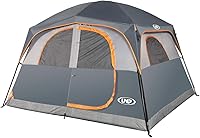
Best Screen Tents for Car Camping: How to Choose
The best screen tent for car camping is one that attaches to your vehicle, keeps the mesh bug-tight and leaves enough headroom to stand up. Start with a 6 x 6 ft pop-up around 7 ft tall, then match the wall material and attachment style to your car and your climate.
On this page (10 sections)
- What size screen tent fits a car camping site?
- How much headroom does a screen tent need?
- Which mesh and wall material keeps bugs out and weather off?
- How does a screen tent attach to your car?
- How long does setup and takedown really take?
- What should you compare before buying a screen tent for car camping?
- Which screen tent is best for your car camping style?
- What else makes a screen tent easy to live with?
- How should you care for a screen tent between trips?
- Final verdict: which screen tent should you buy?
The best screen tent for car camping is one that connects to your vehicle, keeps the mesh bug-tight and lets you stand upright. A 6 x 6 ft pop-up around 7 ft tall is the practical starting point for two or three people, and the wall material decides how much weather it handles.
That combination turns the space behind your tailgate into a dry, shaded room. The rest of this guide walks through the choices in the order that matters: footprint, height, mesh, weather layers, car attachment and setup.
If you are still deciding on the sleeping tent itself, our guide to how to choose a camping tent covers that side first.
What size screen tent fits a car camping site?
A 6 x 6 ft screen tent is the right size for most car campers, because it holds a small table and two chairs while still fitting a standard tent pad. Anything bigger starts to compete with your sleeping tent and your parking spot.
The floor area matters more than the number printed on the box. A 36 sq ft shelter like the Alvantor gives each of two people about the footprint of a camp chair plus elbow room for a cooler.
Check three measurements before you commit:
- The flat, clear patch on your usual campsite pad, minus the sleeping tent.
- The gap between your rear bumper and the nearest tree or post, for a vehicle-connected shelter.
- The packed size against your trunk space, since a screen tent rides along with everything else.
When to size up past 6 x 6 ft
Go bigger when the screen tent is your group's main living room, not just a bug shelter. A family of four eating together needs more than a two-chair footprint.
The VEVOR lists a 6 x 6 ft floor with room for 4 to 6 people, which shows how much the printed capacity depends on whether people sit or stand. Treat seating counts as a guide and measure chairs yourself.
Two people with a table want roughly 36 sq ft. Four people around a table want closer to 50 sq ft, which means either a bigger canopy or a shelter that opens to the car for overflow seating.
If your group is really a tent-sized crowd, the choice may be a larger sleeping tent with a built-in screen room instead. Our roundups of the best 4 person camping tents and best 6 person camping tents show how those layouts handle a family.
Rule: pick 6 x 6 ft for two or three people and a table, and size up only when the screen tent replaces your main seating area.
How much headroom does a screen tent need?
Aim for a ceiling of at least 7 ft at the center, so most adults can stand, stretch and change clothes without stooping. Center height is the number to compare, since the walls slope down from there.
The Alvantor maxes out at 7.5 ft at the center, and the VEVOR lists 7.2 ft. Those figures sit in the comfortable range for standing use.
Door height matters just as much as the peak. A low door forces everyone to duck on the way in and out, which gets old fast when you carry plates and chairs.
If you mostly sit, a 6 ft center height is workable. If you plan to stand at a table or dress inside, the extra foot changes the experience.
Height versus packed size
Taller shelters usually pack longer or heavier. The Alvantor folds to about 32 in wide at 20.5 lb, while the VEVOR weighs about 22.1 lb.
Neither is a backpacking load, and both fit a car trunk.
Weight only matters when you carry the bag from the car to the pad. Twenty-odd pounds is a one-person carry over short distances.
Check the bag against your trunk opening as well as the floor. A long bag that will not slide under a cargo cover becomes a packing puzzle every morning.
Rule: choose at least 7 ft of center height for standing use, and accept a longer packed bag as the price.
Which mesh and wall material keeps bugs out and weather off?
High-density mesh keeps bugs out while letting air through, and a solid roof or wall layer adds rain and sun protection. Mesh alone gives you ventilation, not weather cover.
Look for two things in the mesh: how fine it is and how the door closes. Fine mesh blocks the small flies and midges that ruin an evening.
A zipper that seals tightly along its whole length is what actually keeps the shelter bug-free.
Sun protection is a separate layer. Silver-coated fabric or a UV-resistant canopy blocks heat and glare.
The VEVOR uses 70G reinforced mesh with 300D silver-coated Oxford cloth and lists UV protection. The Alvantor pairs mosquito-proof mesh with waterproof PVC and calls its side fabric a sunshade.
That combination matters on hot afternoons. A mesh-only shelter gives shade only where the roof is solid, so check whether the canopy is fabric or mesh before you count on it for midday relief.
Water resistance and the limits of mesh
Mesh walls do not stop rain. A screen tent with mesh sides and a solid roof keeps the middle dry in light rain, but wind-driven rain comes straight through the sides.
The Alvantor's PVC layer adds storm protection when you zip it into place. The VEVOR's fabric panels offer shade and light rain protection, which is a fair description of what a screened canopy does in a shower.
Plan for the wet side. Put the shelter where the prevailing wind hits a solid wall, not the door.
Add a floor tarp so chairs and bags stay off damp ground. On a cool night, leave a panel open when the bugs allow it, because a shelter sealed up tight gets clammy.
Rule: buy mesh for airflow, then add a solid roof and one closable wall for real weather cover.
How does a screen tent attach to your car?
Vehicle-connected shelters use an adjustable sleeve or strap that seals against the rear bumper, turning the car into extra floor space. The fit depends on the shape of your tailgate, not on the brand of car.
The Alvantor uses a magnetic-sealed adjustable sleeve that hugs the bumper and keeps bugs out. Alvantor says it attaches to SUVs, trucks, Jeeps and most hatchbacks.
That 360-degree connection is the feature to weigh if you camp from the car rather than beside it. You get a covered route from the trunk into the shelter, useful for unpacking in the rain.
Two checks before you buy:
- Measure the width and height of your open tailgate, including any spoiler or roof rack.
- Decide whether the shelter must stay attached while you drive away for the day.
When a standalone shelter is the better fit
Skip the car connection if you plan to drive off during the day. A freestanding screen tent that you stake to the ground stays put while the car leaves.
The VEVOR works three ways: as a tailgate tent, as a standalone car camping tent and as a screened shelter beside the car. That flexibility suits a trip where the car comes and goes.
The Wakeman takes a different route. Its screen area is sewn into a 6-person cabin tent, so the mesh room travels with your sleeping space instead of sitting beside it.
Rule: pick a bumper-connected shelter if the car stays parked at camp, and a freestanding or built-in screen room if it doesn't.
How long does setup and takedown really take?
A pop-up frame opens in about a minute, but folding it back into the bag takes practice. Budget more time for the first few takedowns than for setup.
The Alvantor opens instantly with no assembly and folds into its carry bag. Alvantor warns that the tent opens forcefully, so release the secured webbing away from your face and hands.
It also suggests practicing the fold at home.
The VEVOR pops up in minutes without tools. Its kit includes support poles, a ground cloth, stakes, ropes, fiberglass poles, a strap and storage bags.
The Wakeman is a pole-set cabin tent rather than a pop-up. It ships with the poles and assembly instructions, and it packs into a 23.5 in carry bag at 20.5 lb.
That is a slower pitch but a familiar frame.
Staking and guylines
Stake every corner before you load the shelter with chairs and coolers. Wind catches a big canopy, and an empty screen tent is the easiest thing at camp to flip.
The Alvantor includes 4 guylines and 10 stakes, plus 2 fiberglass support poles. The VEVOR includes 2 support poles and 18 ground stakes.
Use them all when the forecast looks unsettled.
The Wakeman's built-in screen area saves you a separate setup, but the whole cabin goes up as one structure. That suits a basecamp where the sleeping tent stays put all week.
Rule: practice the pop-up fold at home once, and always stake the shelter before the first chair goes in.
What should you compare before buying a screen tent for car camping?
Compare floor area, peak height, packed size, wall layers and attachment style, because those five numbers decide how the shelter fits your car and your campsite. Brand claims about versatility matter less than these figures.
A side-by-side view helps. The table below sets out the three shelters in this guide.
| Product | Best for | Our score |
|---|---|---|
| Alvantor® Pop Up Screen House | a sealed car connection | 9.4 |
| VEVOR Pop Up Screen House Tent | three-way use | 9.1 |
| Wakeman 6 Person Cabin Tent with Screen Area | one-tent family camping | 6.8 |
The Alvantor and VEVOR sit close on floor area at 36 sq ft, so the split comes down to wall layers and attachment. The Wakeman brings its screen room inside a cabin tent, which changes the job it does.
Three questions sort most buyers:
- Do you need the shelter to seal against the car, or just sit near it?
- Will you stand up inside, or only sit?
- Does rain protection need to cover the sides, or is a solid roof enough?
Answer those and the shortlist gets short. Our roundup of the best 3 person tents for car camping is the next stop if the sleeping tent is still undecided for a smaller group.
Reading the capacity numbers
Occupancy figures on screened shelters are loose. The Alvantor lists a 6 x 6 ft floor for 2 to 3 adults.
The VEVOR lists the same floor size for 4 to 6 people. The difference is standing versus sitting.
A shelter rated for six may fit six people standing at a party and only two chairs and a table for a meal. A 36 sq ft floor holds about four camp chairs with no table, or two chairs and a small table.
Rule: shortlist on floor area and peak height first, then use wall layers and car attachment to break the tie.
Which screen tent is best for your car camping style?
Pick the Alvantor for a sealed car connection and all-season layers, the VEVOR for flexible three-way use and open views, and the Wakeman for one-tent family camping with a built-in screen room. Each fits a different trip.
The Alvantor earns the top score here at 9.4. Its 4-in-1 design combines mesh walls with waterproof PVC, attaches to the vehicle with a magnetic-sealed sleeve and folds into a 32 in bag.
That covers bugs, rain and shade in one shelter.
The VEVOR scores 9.1. It connects to the tailgate, stands alone or works as a shelter beside the car, and its 6 x 6 ft floor with wide mesh panels opens up the view.
The silver-coated canopy adds UV protection.
The Wakeman scores 6.8 as a screen tent option. Its mesh room is part of a 6-person cabin tent rather than a separate shelter, so it suits a family that wants one structure for sleeping and sitting.
The tent is water-resistant with a rainfly and center height of 72 in.
Matching each shelter to a trip
Choose the Alvantor when your car stays parked at camp and you want one shelter to handle mosquitoes, sun and rain. The PVC layer and mesh give you a choice of cover as the weather shifts.
Choose the VEVOR when your days involve driving away and coming back. The standalone option means the screen room stays staked while the car leaves, and the wide mesh keeps the campsite view open.
Choose the Wakeman when the screen room should be part of the sleeping tent. A family that wants a porch attached to the cabin gets one pitch and one footprint.
Rule: buy the shelter whose attachment style matches how often your car leaves camp.
What else makes a screen tent easy to live with?
Small details decide whether a screen tent feels convenient or annoying by day three: door design, storage, floor treatment and how the bag handles. None of these show up in a floor-area figure.
Start with the door. A roll-up door that secures out of the way beats one that flaps in the wind.
The VEVOR uses a built-in buckle to roll up and secure its door.
Look at the floor. The Alvantor includes a removable floor tarp.
The VEVOR includes a ground cloth. Both keep chairs and bags off damp grass and make sweeping out easier.
Check the stakes and guylines against your usual ground. Ten stakes and 4 guylines cover a 6 x 6 ft shelter on soil.
Rocky or sandy sites may need longer pegs. The Alvantor also includes repair patches for mesh and PVC, which helps if a stake tears the wall.
Packing and storage at camp
The bag size decides where the shelter lives in the car. A 32 in bag slides into a trunk gap.
A longer bag may need the back seat. Around 20 lb is easy for one person over flat ground, but on a slope or a long walk from the parking area it becomes a two-hand carry.
Keep the shelter's own small parts together. Stakes, guylines and repair patches disappear into a crowded trunk.
Dry the shelter before storage, since mesh and coated fabric hold moisture and a damp bag grows mildew between trips.
Rule: choose the door, floor and bag that suit your daily routine, because those details get used more than the headline specs.
How should you care for a screen tent between trips?
Rinse the mesh, dry every layer and store the shelter loose and dry, so the coating and zippers last more than a season. Sand and grit wear mesh faster than sun does.
Set the shelter up at home after a trip. Hose the mesh walls and floor, then let everything air dry fully before folding.
Wipe the PVC or coated fabric with a damp cloth rather than scrubbing it, since sharp folds along the same crease weaken the coating over time.
Check the zipper after every trip. A little grit in the teeth turns a smooth door into a stuck one.
Brush it out and run the zipper once.
Replace bent stakes rather than forcing them straight. A bent stake pulls out in wind and can tear the corner it holds.
Store the shelter in its bag but not compressed to the limit. A loose fold keeps the frame and fabric happier through the off-season.
Rule: dry it fully, store it loose and keep grit out of the zipper to get more seasons from the shelter.
Final verdict: which screen tent should you buy?
The best screen tent for car camping depends on whether the car stays at camp. Buy the Alvantor if it does, because its magnetic bumper sleeve, mesh walls and waterproof PVC layer cover bugs, rain and sun in one shelter at a 7.5 ft peak.
Buy the VEVOR if your car comes and goes. Its three-way use, 4 to 6 person floor and silver-coated canopy keep the view open while the shelter stays staked.
Buy the Wakeman if the screen room should travel with the sleeping tent. It packs a 6-person cabin and a screened seating area into one pitch.
Whichever you choose, stake it before the first chair goes in and practice the fold once at home. If the sleeping side is still open, read the best 3 person tents for car camping for a small group or the best 6 person camping tents for a family before you finalize the campsite plan.
Frequently asked questions
How big a screen tent do I need for car camping?
A 6 x 6 ft screen tent covers a small table and two chairs for two or three people. Go larger only if you plan to move a group inside, and remember that extra footprint also has to fit your campsite pad.
Can a screen tent stay up in the rain?
It can if the roof and walls are waterproof fabric rather than mesh alone. Mesh walls shed nothing, so pair them with a solid roof and a floor tarp, and stake every guyline before weather arrives.
Is a screen tent worth it compared with a tarp?
A screen tent gives you bug-free air and shade you can stand under, while a tarp only blocks sun and rain. If mosquitoes or flies are the main problem at your sites, the mesh walls earn their extra weight.
How long does a pop-up screen tent take to set up?
A pop-up frame usually opens in a minute or two once you release the webbing. Folding it back into the bag takes practice, so open and close it once at home before your first trip.